Goals:
- Decrease community tolerance for domestic violence
- Increase the number of natural supporters (family members, friends, coworkers, etc.) who intervene appropriately with someone experiencing domestic violence
- Help young people avoid abusive situations
Strategy: Use health education principles (similar to those applied in stop smoking and designated driver campaigns) to design messages, themes and materials that motivate people to change their attitudes and behaviors.
Results:
- Obtained widespread media coverage of the warning signs of domestic violence
- Created a slogan that continues to represent the effort to end domestic violence
- Held successful events throughout the year highlighting domestic violence issue and warning signs
- Distributed more than a hundred of thousand Love Shouldn’t Hurt brochures printed in six languages with the warning signs of domestic violence
- Received an average of more than 120 phone calls a month to domestic violence information line
Tactics:
Community outreach
- Distribution of brochures to community organizations, health organizations, libraries, apartment complexes and other outlets
- Information line which provided information on warning signs and resources
- Periodic newsletter to 900 opinion leaders in King County
Events
- Father’s Day events: Letters to/from abuse dads exhibit
- Uphill Struggle walk during October’s Domestic Violence Awareness Month
- Lilly Loves Charlie play
Publicity
- News releases on events and to take advantage of domestic violence stories in the news (when a woman dies; when a killer is set free…)
- Op-ed pieces from various people within the social services, law and health fields to promote their unique view of domestic violence
- Convert op-ed pieces to articles for use in major employee newsletters focusing on violence in the workplace
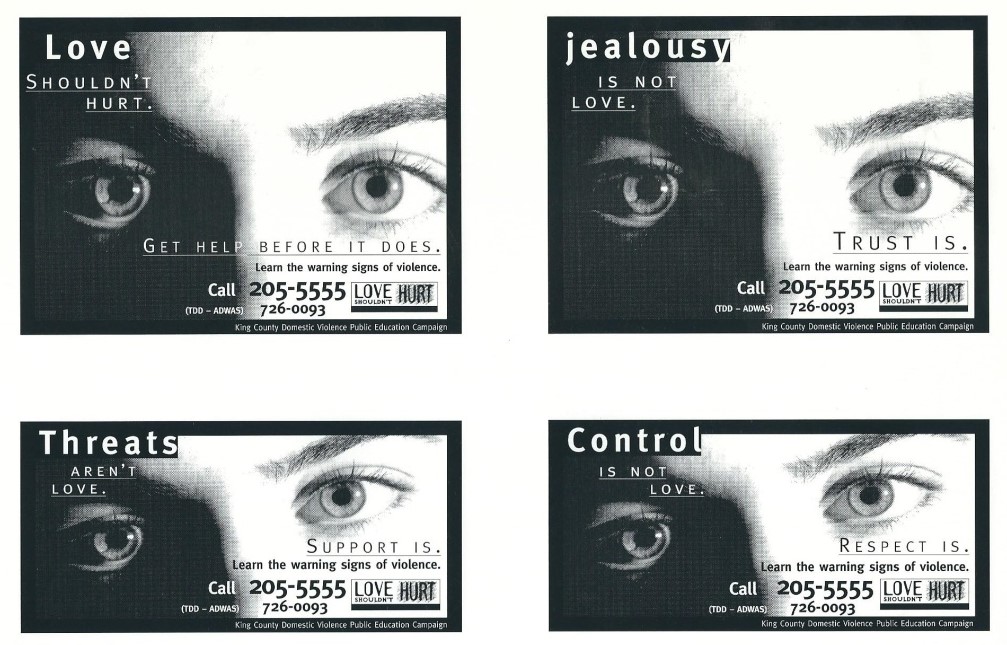
Public service ads and announcements
- Transit advertising in Seattle Metro area
- Ads of various sizes to be distributed to all publications in Puget Sound
 JoyceGlavish.com